“There
is no greater agony than bearing an untold story inside you.” – Maya Angelou.
In the age of social-media
fueled narcissistic fetishism, the very suggestion of writing about one’s
problems invariably invites scorn if not disinterest. However, research indicates
that there’s more to this than meets the eye.
 |
| The Grieving Angel |
The crucial role of writing
in helping alleviate trauma wasn’t so apparent to me until I read “Eaten by the Japanese” (review here;
briefly a story about a British Indian soldier captured by Japanese as PoW
during World War II). Richard Crasta’s essay makes a very insightful observation
about his father’s book which, according to him, was probably an effort to “exorcize his ghosts by consigning them to
paper” (what a vibrant phrase!). Likewise, the after-taste of Richard
Crasta’s “The Killing of an Author” (review
here; the story of the struggle of an uncompromising, independent writer) lingered
in my mind long after I had finished reading the book.
Lest one dismisses this as a
variant of masochism or schadenfreude, the key differentiator lies in the
after-effect it produces in reader’s mind. While the former stimuli are more
likely to recede soon after the perversion-induced high, works written by blood
and tears possess the capacity to drill purpose into an ennui-filled existence.
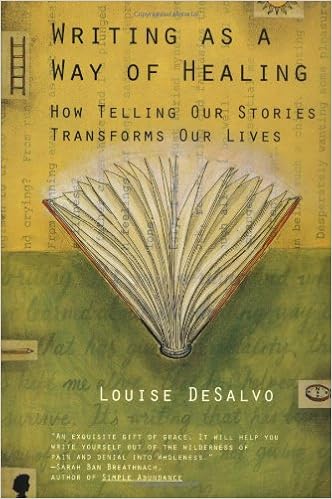 Googling up a bit, I found
vast literature on this subject. Writing
as a Way of Healing: How Telling Our Stories Transforms Our Lives by
Louise Desalvo appears to be among the more popular books in this genre (the
author blogs here). She delineates an
entire step-by-step process on how to use writing for healing, and I found this
quick-take. She writes, “Important cultural work is being done by
people writing the literature of personal disaster – the work of helping to
assuage suffering”.*
Googling up a bit, I found
vast literature on this subject. Writing
as a Way of Healing: How Telling Our Stories Transforms Our Lives by
Louise Desalvo appears to be among the more popular books in this genre (the
author blogs here). She delineates an
entire step-by-step process on how to use writing for healing, and I found this
quick-take. She writes, “Important cultural work is being done by
people writing the literature of personal disaster – the work of helping to
assuage suffering”.*
Suffering, being an
ineradicable part of human existence, inescapably drags all to the cesspool of
fear, doubts, emptiness, anger etc. The difference however is the meaning we
ascribe to it. The trauma, when accepted as an inevitable part and parcel of
one’s purpose and meaning of life ceases to hurt us further and instead becomes
the springboard for one’s growth. Indeed, “the
difference between a victim and a survivor is the meaning made of trauma.”*
 |
| 'Revenge is a dish best served published!' -Lisa Kovanda |
When we write, the burning
resentment that choked our memory-veins is melted and downloaded into the piece
of paper. We’re freed from the burden of mental cache of past memories, and the
released space can be utilized for newer pursuits. Let it be emphasized again:
this isn’t an elaborate exercise of self-pity aimed at attention-whoring. This
is a recuperative tool that helps the person understand what exactly is
troubling him, define it properly in clear terms, and crystallize all his
anxieties to the root-cause and most important of all: helping the person move along.
“Engaging
in writing, in creative work, then, permits us to pass from numbness to
feeling, from denial to acceptance, from conflict and chaos to order and
resolution, from rage and loss to profound growth, from grief to joy.”*
I would like to offer some
quick suggestions based on my limited experience:
- Find a solitary place and time where none is likely to disturb you.
- Keep a separate notebook exclusively for this purpose (no need of high-quality notebook or pen; normal ones work just fine.) Keep the notebook away from the prying attention of your family and friends.
- Some of you might be more comfortable with their laptop than notebook; in principle, the laptop serves the purpose too, but writing with a pen on a piece of paper gives that extra zing to your flow.
- Do not bother about grammar, spellings, tone and tenor while in the process of writing. Just reflect your mindstream on the paper as-it-is. Write ferociously if possible, but without hesitation at all costs.
- Once your raw thoughts have been dumped into the paper, take a break of 1 – 2 days. Then, with a more sober mind deliberate on the thoughts and try to understand the epicenter of trauma, why it still persists, and how you could alleviate them. Re-write now with better flow of events, greater understanding of the multiple points of view and a more objective mind. “The pursuit of truth is not important. The pursuit of that truth is important which helps you in reaching your goal.” (Ayn Rand)
- Try of thinking of this as your memoir to be published later – replete with the details, objective frame of reference, and stoic acceptance of destiny – as if, with the act of writing, you’ve finally “exorcized your ghosts by consigning them to paper”.
 |
| Letting go is hard, but sometimes holding on is harder. |
Go on, start writing today
and attain a state of personal acceptance!
Note: My hesitation in
making such memoirs public stems from many reasons - chiefly that our
self-estimate of our sufferings is hugely exaggerated. But, when trauma is
caused by failure of public systems, the survivors are duty-bound to break
their silence and speak up. In doing so, they are performing a vital social
service of shaming the shame that gags the fellow-sufferers from opening up.
PS: *quotes by Louise
Desalvo
Nicely weaved and put across! Only thing is, write-up could be streamlined for the layman's understanding as ultimately every writer would want his reader to get each and every point he wishes to make.
ReplyDeleteWell-Written.. The practice of creative journaling helps in taking care of our emotions in this highly digitized world
ReplyDelete